


A year ago the AI conversation with most owners was “is this worth paying for at all?” Now I’m hearing a different one: “we’re paying for four of these things, a couple of them are load-bearing, and I’ve no idea what this line of the budget looks like next year.”
That second conversation is progress, honestly. It means the tools are doing real work. But it deserves the same discipline as any other supplier cost, and mostly it isn’t getting it.
The new shape of the bill
Business Insider ran a piece this week on small firms discovering the running costs of AI — including one owner who now sets aside a $500-a-month buffer purely in case prices rise on tools his workflows depend on. His worry is worth quoting, because I hear versions of it constantly: “I would get something deployed and then get all dependent on it as part of my workflow, and then the prices jack up.”
He’s right to plan for it. AI pricing is young and it moves — in both directions. This month one major provider halved the price of its mid-tier model while the top-end options got more expensive. Subscriptions quietly gain tiers. Usage-based bills creep as the team leans on the tool more. None of this is sinister; it’s just what a new market looks like.
Three habits that keep it boring
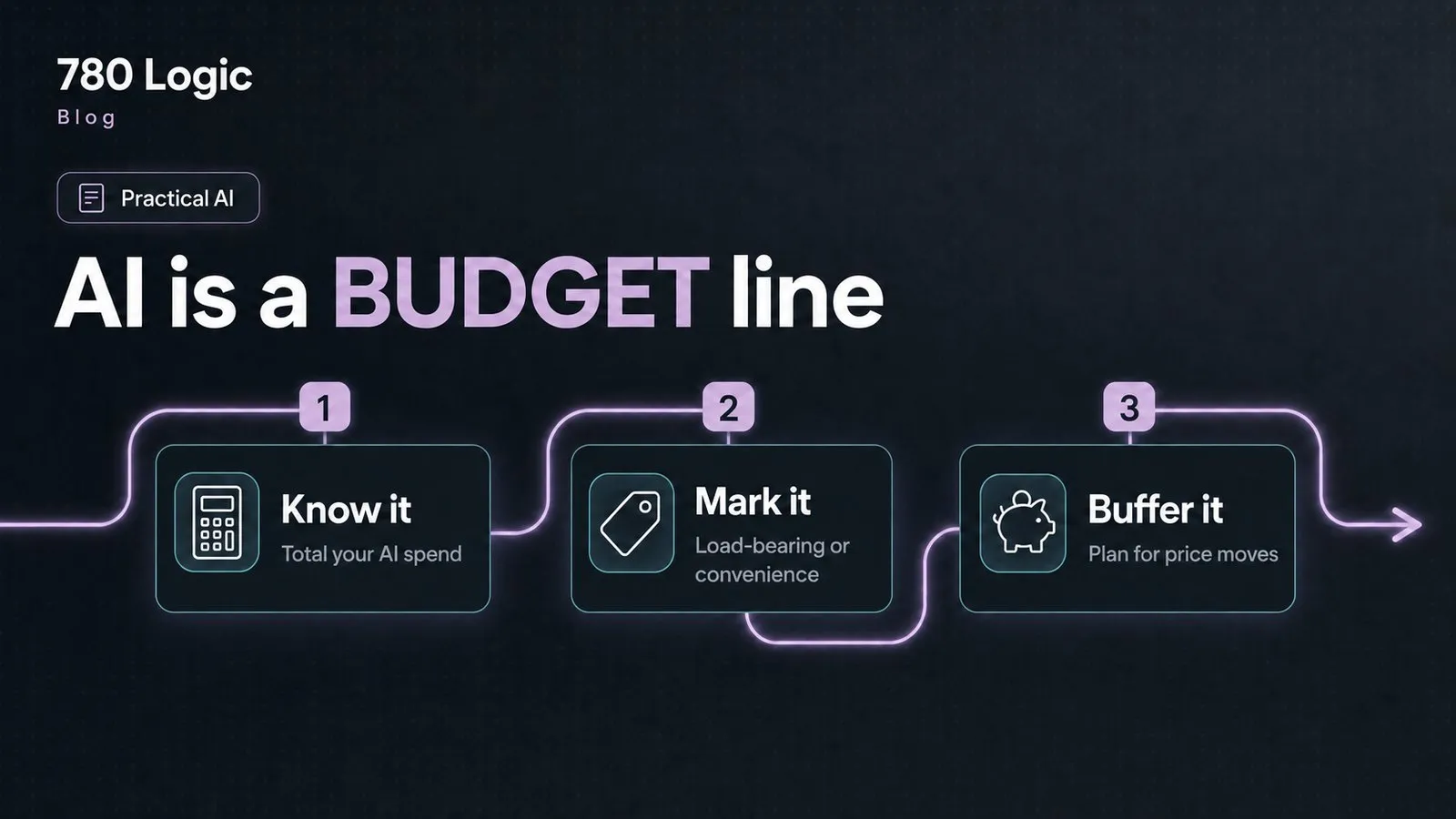
- Know the number. Add up every AI subscription and API bill across the business — including the ones individuals expensed and forgot. Most owners I ask are off by half.
- Mark what’s load-bearing. For each tool: if the price doubled tomorrow, would you pay it? If yes, that tool deserves a plan B and a line in the budget, not a spot in the “misc software” pile.
- Hold a small buffer. A modest monthly set-aside — sized to your usage, not someone else’s — turns a future price change from a crisis into a non-event.
The goal isn’t to spend less on AI. It’s to know what you’re spending, what it’s replacing, and what you’d do if the price changed — same as any supplier you rely on.
A small, honest next step
This week, make the list: every AI tool the business pays for, what it costs, who uses it, and one word — convenience or load-bearing — next to each. Twenty minutes. That single page turns AI from a vibe into a budget line you can manage, and it usually surfaces one subscription nobody has opened since March.